Design Trends
Microcement: The Seamless Surface Quietly Transforming Indian Bathrooms and Floors

Every material has a moment, and microcement's has arrived in India for a very practical reason: it is the only premium finish that can renovate a bathroom in an occupied flat without a single tile being broken. No demolition, no debris down the service lift, no weeks of dust. Just a seamless new surface over the old one.
What microcement actually is
Microcement is a cementitious coating applied at just 2 to 3 millimetres total thickness, built up from a bonding primer, a fibre-mesh reinforced base coat, two fine finish coats trowelled to the chosen texture, and a multi-coat polyurethane seal. The result is a monolithic surface that bonds to concrete, screed, plaster, and crucially, existing tile.

The renovation-without-demolition case
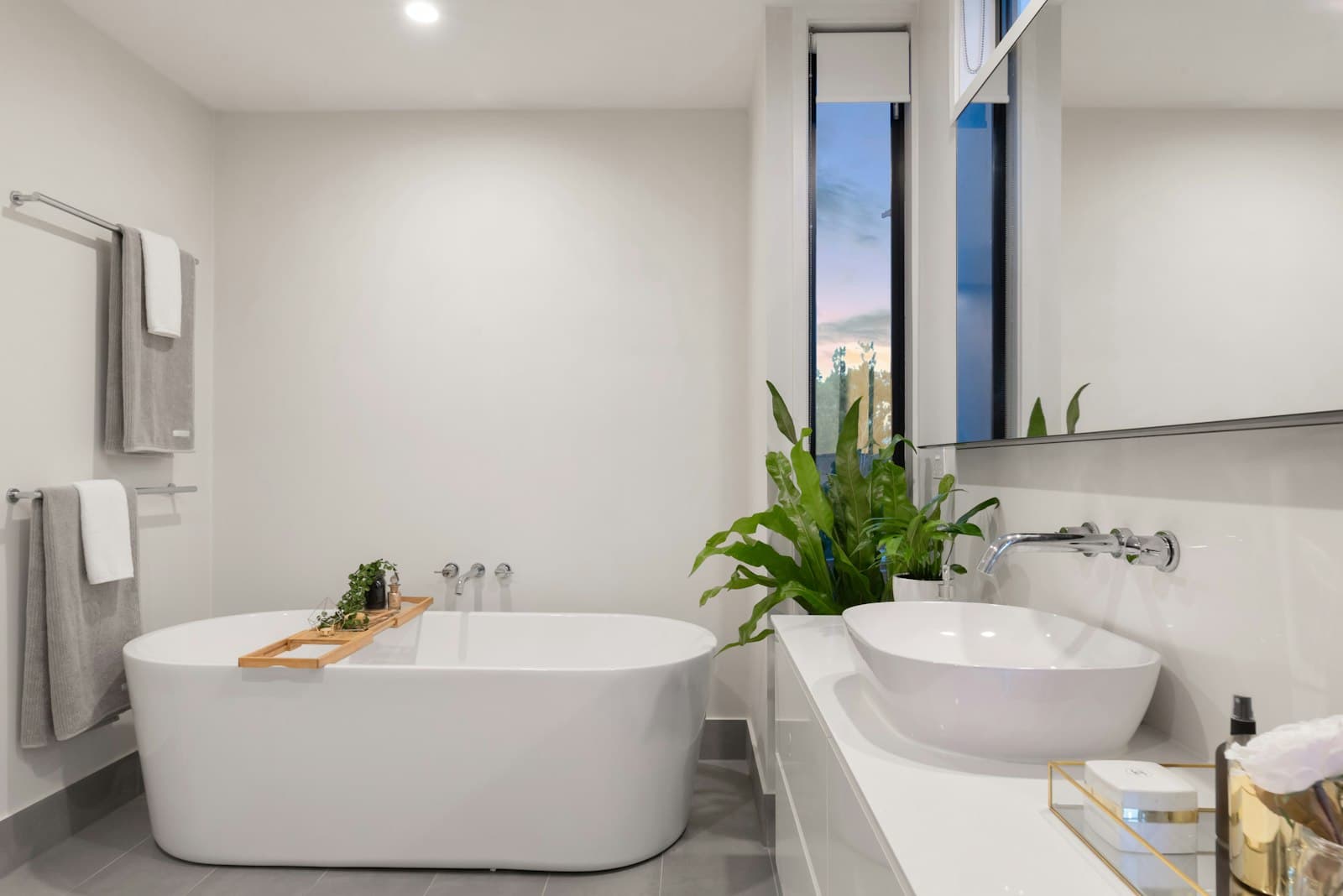
Retiling a bathroom in a Mumbai or Pune tower means hammering, debris disposal past society rules, waterproofing redone from scratch, and the bathroom out of action for weeks. Microcement over sound existing tile compresses that to days, with no demolition noise and a fraction of the disruption. For occupied homes, it is simply a more civilised renovation.
- Typical bathroom timeline: five to seven days including sealing and cure.
- No hammering, no debris, no society complaints.
- Grout lines disappear, which is where most bathroom grime lived.
Waterproofing done properly
Microcement itself is water-resistant; the system makes it waterproof. In showers and wet rooms we install a membrane beneath the base coats and finish with a wet-zone-rated PU seal. A supplier who quotes a shower without discussing the membrane and seal specification is quoting a failure with a delivery date.

Beyond bathrooms: floors, stairs, and counters
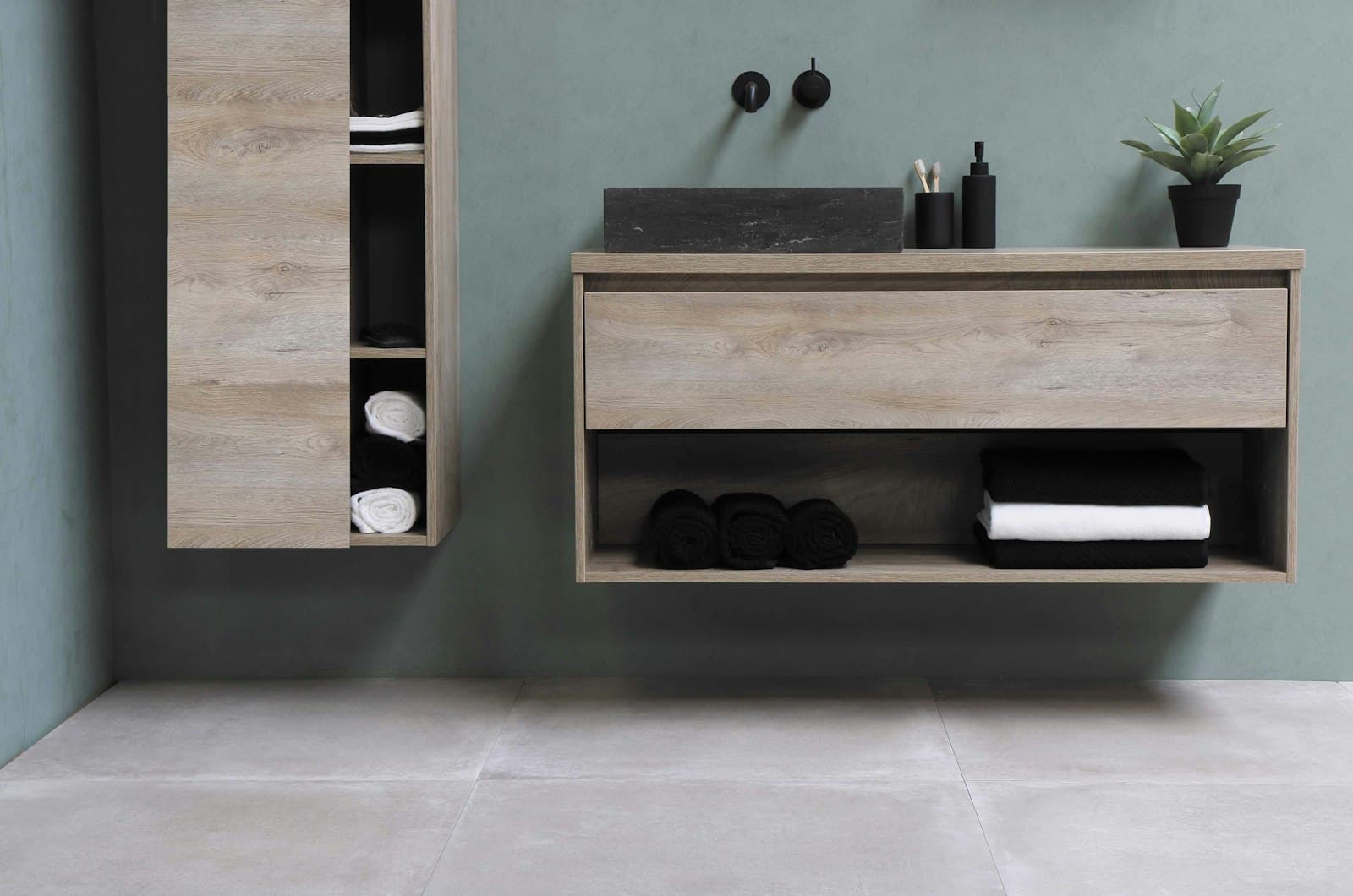
The same system runs across floors, staircases, countertops, and furniture, which is where microcement's design power lives: a floor that flows up a staircase and across a kitchen island with no transition strips, no grout, no visual noise. It suits contemporary architecture the way polished stone suits classical.

Durability and honest limitations
Sealed microcement is abrasion-resistant and lives comfortably under real family traffic; it can also be spot-repaired by the applicator who installed it, which tile cannot. Its honest limitations: it wants a sound substrate, it should not bridge active structural cracks, and deep gouges from dragged furniture will mark it just as they mark wood or stone.
Frequently asked questions
- Can microcement really go straight over old tiles?
- Yes, provided the tiles are sound and well-bonded. We assess hollowness and adhesion first; loose tiles are re-fixed or removed locally before the system goes on.
- Is microcement slippery in bathrooms?
- Texture and seal are chosen for the use. Wet-area floors get a finer anti-slip texture and matte seal that grips underfoot while staying easy to clean.
- How do I maintain a microcement surface?
- Neutral pH cleaners and a soft mop. Avoid acids, bleach, and abrasive pads, the same care rules as natural stone.
- What does microcement cost compared to retiling?
- Material-for-material it is a premium finish, but once demolition, debris, waterproofing redo, and downtime are counted, whole-project costs are often comparable or better, with far less disruption.
Planning a seamless renovation?
We install microcement across Mumbai, Thane, Navi Mumbai, and Pune, from single bathrooms to full-floor programs. Ask for a site assessment and texture samples, and see how quiet a renovation can be.
Priyanka Dangi
Content & Finish Specialist, Contour Surfaces
Priyanka writes about decorative surfaces, material selection, and the craft behind premium wall finishes, drawing on Contour Surfaces' project work across Mumbai, Thane, Navi Mumbai, and Pune.